January 26, 2009

To Prune an Apple Tree

As sub-freezing temperatures lay their cold paws across the landscape and veils of windborne snow course endlessly up hill and down dale, the gardener grumpily endures nature's enforced season of dormancy upon those who would till. Just as all growing things must pause and wait out winter's months of quietude and inactivity, so must gardeners. Hankering after some means of keeping one's hand in and being productive during the mid-winter exile from the garden, plans are drawn up for the pruning of the two-year old Fuji apple tree.

Very little pruning has been practiced in my garden, to date. The roses do get lopped back by about a third early each spring, as this is universally recommended as essential for their health and bloom. A white lilac that hasn't yet deigned to flower in five years had about a third of its young branches cut to the ground last summer, again because such pruning is supposed to bring bloom. In general, however, the shrubs and trees grow on uninterrupted, and may ascend to whatever width and height they are comfortable with, as the bigger they get, the happier the garden and its wildlife appear to be. And shrubs and trees alike are all still in their youth and smallish in size, pruning more than broken or crossed branches isn't needed at this juncture.

Except, apparently, for the apple tree. A radio garden show happened to mention that apple trees must always be pruned in their first years or they will go into a long pout of poor growth and delayed fruiting. This was news to me, but a little research indicated that indeed, the consensus among farm and garden arborists held pruning to be essential for apple trees (though not for other fruit-bearers, like cherry). The extension service at Tennessee's Clemson University, at www.hgic.clemson.edu, puts up a very broad and deep body of information on home garden topics, with detailed factsheets on many matters and species from peonies to pruning.

To begin, its necessary to remove all but one “leader” or central branch on the apple tree, cutting competing leaders back close to a bud and to their starting point. Looking at the little Fuji, it does in fact have three or four about equally tall central branches vying for the role of leader, so all but the biggest and best shaped will have to come off.

The leader central trunk then needs to be “headed back” by pruning about one-third off the top, again making a cut close to a bud. All downward pointing branches and suckers (branches that point straight up) must be removed, cutting just above the “collar” of raised bark that circles the branch where it emerges from the tree trunk. Branches with narrow crotches and those at less than a 45-degree angle from the trunk also get sliced off above their collars.

The Fuji in the garden, now that one knows what to look for, actually has every single one of these reportedly inferior, inhibiting branch growths. Perhaps that partially explains its production of just one lone apple its first year in the garden, and one lone apple again last summer, its second year.

Finally, the tree should be relieved of all but three-to-six scaffolds or side branches, evenly spaced around the central trunk. The cut limbs must be removed from the area, and burned or recycled in a distant brush pile, as left as layabouts on the ground they make very desirable residences for insects and diseases which feed upon and harm fruit trees.

Not until February 14 to 18 can this pruning plan be carried out. That, according to the Blum Farmer's Almanac (available at most grocery stores or www.blumsalmanac.com), is late enough in the winter dormant period to not be facing too many more weeks of freeze, yet before new spring growth will have begun. Those particular days in February mark a phase when the moon is waxing (or increasing in size), and the planets are best aligned to allow pruning to promote, rather than discourage growth. The Farmer's Almanac maintains that pruning during a waning period of the moon will certainly decrease growth, why they do not say. The waxing moon building toward full exerts a stronger gravitational pull upon the earth, its tides, tree sap and other energy fields, and thus probably also beckons forth growth spurts. The full moon, after all, which exercises the maximum gravitational pull each month, always brings the most births of human babies, as well.

Plotting and planning, researching and ruminating, gazing out the windows or braving the elements to hike through the snow drifts for closer inspections of the drowsing garden, so do the frustrations of not gardening get somewhat mollified. So do the days and weeks of January, the most unforgiving month, tick more usefully by. Or as Edward A. Bowles, English gardener and author, so eloquently states, “if only the gardener will plant enough plants of the most different types and habits procurable, there ought to be never a day in which he cannot find some pleasure...no minute of the daylight hours in which there is no interesting and health-giving work to be done.”

January 16, 2009

Green Warfare

City and town environments can be harsh, monochromatic, fairly lifeless places. When I lived in the city, my favorite aspects of the surroundings, contrarily, were the parks, waterways, bordering woodlands, botanic and private gardens, the places where water flowed and plants grew. In economically depressed neighborhoods and in heavily-built municipal centers, the eyes and heart can languish for the uplifting presence of greenery, flowers, trees.

For the past several years, guerrilla gardeners have embarked upon a mission to redress the paucity of plant life in urban landscapes. From New Zealand to Canada, Great Britain to South Africa, Chicago to Berlin, a loose coalition of rebel gardeners have made it their business to introduce growing, blooming specimens into city hardscapes. Sometimes it is a single rosebush at the corner of a blacktopped schoolyard, or a ladder of ivy vines against a chainlink fence, or a bed of perennials in a barren traffic island. A flow of daffodils scattered on a streetside verge. A wildflower patch sown into the neglected yard of an abandoned house. Rows of beans, squash and salad greens tucked into an empty city lot.

Richard Reynolds, an enterprising and community-spirited young English fellow, launched the present-day guerrilla gardening movement by laying claim to a lifeless, ugly traffic island in London and setting about to put it to productive, pretty use by filling it with flowers, shrubs and trees. At www.guerrillagardening.org, Mr. Reynolds lays out the premise of the movement as a “war against neglect and scarcity of public space to grow things, beautiful, tasty or both.” In photographs and words, he and the legions of guerrilla gardeners who have followed his lead document their efforts to make their locales more beautiful and useful through the reclaiming of unutilized public spaces for cultivation.

Guerrilla gardening, under various monikers, has a long and storied history. In 1649, Englishmen Gerrard Winstanley and William Everard founded the Diggers agrarian revolutionary society of unemployed laborers and peasants on the principle that common land and wasteland should be available to the poor for the raising and sharing of communal crops. Johnny Appleseed practiced a similar, if more solitary, agrarian socialism by starting orchards wherever he rambled on U.S. public land. Community gardens established in schoolyards and vacant lots, with or without official “permission,” have been a regular phenomenon in countries near and far during eras of economic hardship and food shortage. In the 1960s, the Diggers of San Francisco pursued their agenda of free food and public services, in part, by creating gardens and distributing free food in public parks. Following the horrendous tragedy of September 11, 2001, a number of New York City firehouses found themselves the recipients of volunteer garden groups who brought vitality and cheer to their doorsteps with planters, windowboxes, sidewalk flower beds.

The genius of guerrilla gardening is that anyone, child to elder, poor or rich, can practice it. It comprises an egalitarian opportunity to transform a dour, oppressive, arid spot into a place of cheer and fecundity. For little outlay beyond a bit of cogitation, physical endeavor and a few dollars, a packet of seeds can be coaxed into seedlings to be transplanted into a sidewalk or street verge. Small shrubs and seedling trees can be dug up from land that is slated for the bulldozers of approaching building development and given a new home in a traffic roundabout or other wasted city plot. Grafts and divisions of plants from one's own garden can be the basis of a new flower bed at a health clinic, jailhouse, retirement home, public housing estate.

Many city gas stations, corner shops and convenience stores have easements, foundations and sometimes even planters available and containing nothing more than dirt and weeds, when who knows? Perhaps the store owners might chip in the odd ten-spot or two to a willing worker offering to sow the brilliance and hopefulness of sedums, virburnums, cranesbill geranium, lily-of-the-valley, phlox. Sunflowers, sage and thymes, coneflowers, daisies, ivies, grapevines, honeysuckle, cottoneaster, there's a well-nigh infinite list of the perennially-flowering plants and shrubs that are tough and scrappy enough, once on their legs, to survive and flourish for years with minimal or no maintenance beyond what nature provides.

The wizardry of guerrilla gardening is that it inspires and rewards all. The gardener, and every passerby who happens upon a guerrilla garden, every community member who receives a basket of runner beans or a zuccinni, reap alike moments of grace, pleasure and bounty where previously they encountered only the empty drear. That's an insurgent warfare everyone can get behind, swapping the cruelty of swords for the goodness of ploughshares.

January 10, 2009

A Catalogue Against the Cold


The first 2009 plant catalogue,* from Bluestone Perennials, arrived in the mail, a most welcome sight in these deep winter days with its jaunty cover photo of a fling of apricot helenium flowers. It seemed worth spending maybe a quick half-hour browse, just to see what plants might jump up from the page as potentials for next spring (because spring will return in just a few months, even though it feels so very far away and unlikely with the garden hibernating beneath several feet of snow).

Two or three hours later, having read the tantalizing catalogue from cover to cover, a selection of a very restrained half-dozen specimens were flagged as definite must-haves for the garden. Already fairly flush with spring and early summer flowering plants, the garden still yearns for more summer into autumn bloomers. This consideration, along with seeking newcomers to introduce fresh personalities to the garden, and also to offer bloom time that lasts for more than just a week, guided the specimen choices.

Rudbeckias produce daisy and sparkler-style flowers from summer until frost knocks them down. Black-Eyed Susans are a common rudbeckia. Their color scheme ranges from butter yellow to sherry red, and some types – Henry Eiler, and maxima, and prairie sun – reach from three to even five feet in height. These gangly rudbeckias could really fill out and punctuate the back of a border during autumn's low-flowering stint. Prairie sun, labeled a “gold medal winner,” won a place on the order list for its limey green center surrounded by petals shading from soft tangerine to pale yellow at their tips. The catalogue promises rudbeckias are robust, self-seeding and can last for many years. What more could be asked?

Next on the list of desirables comes a Max Vogel anemone, with a flower that resembles a double-petalled cosmo, and colors a cotton-candy pink around a hot-orange center. This one also flowers continuously late summer through the fall, and grows two-to-three feet tall. When a plant is tall, bushy and full-flowered enough to be seen and enjoyed from across the yard or through the windows from indoors, it really broadens the garden vista and charms.

Another perennial that will stand up tall for itself with a two-foot, columnar flower stalk is the cherry blossom delphinium. The creamy pink flower got this one on the list, it's just what the blue and white delphiniums in the border under the front window need to nicely enlarge their color scheme. I'm a sucker for the pretty, frilly delphinium, even though it takes a little extra watering to keep it going in dry summers. Delphiniums love the sun but really don't like to get parched. If the flower stalk is cut back close to the ground when the bloom is finished, it will re-flower very reliably, though usually with a smaller flower head.

In the smaller, edging category, a catananche (love plant) caerulea teal blue and a feathery white look like winners. Late June through August flowering, these grow to about a foot and a half, are reported to have “many flowers above interesting silver-green foliage,” and have a flower similar in appearance to a bachelor button, pointy dense petals with a contrasting-color center. These girls like sun and well-drained soil, so they could really take to the front edge of the sunny, sandy garden, raising smiles to passersby on the sidewalk.

A surprising, fairly unusual find in the catalogue were special-species chrysanthemums, such as spoon, quilled, and football mums, which previously have been come across only in specialty mum catalogues. Mums are the queens of autumn tints and show in the garden, long-lasting and pretty hardy if they are mulched in cold-climate winters. If the foliage is pinched back up until the first of July, and no later, mums create lots of flower buds. The football mum flowerhead spreads round and wide, with inward-curving petals, in a big sphere more like a giant softball than a pigskin oval. Here are the colors offered in the football mums – amber, coral, French vanilla, russet, buff pink and light bronze. I mean, how could anyone resist trying some of these Reubenesque beauties?

Last but not least, the pinky-winky, perpetual-flowering hydrangea is darn near irresistible. The shrub can reach six feet in height, the twelve-inch, cone-shaped flowers stand upright and segue from white to pink to dusky rose, and can be cut and hung to dry for arrangements that will last until the next year's blooms appear. Hydrangeas also like regular watering in droughty spells, but doesn't summer-long flowering make it worth a little extra hose time?

All the above entries except the delphiniums will be brand new characters on the scene. At present, the standard, well-known cottage-garden plants such as hollyhock, poppy, daisy, lupine, peony, rose and so forth, are already well-represented in the garden. Now I'm looking to incorporate adventure and new names, species that may give innovation and diversity, that can be tried out to see if they will like and thrive in this northwest Michigan location, and perhaps enlarge the collection of favorites and strong performers.

Catalogues are excellent for searching out such new, untried plants. They also make useful reference tomes, to be consulted for photos and behavioral traits when one comes upon the name of an intriguing, heretofore unknown plant. With information from a catalogue, the gardener can seek out wanted specimens at local nurseries, or request that they be ordered by the neighborhood garden center. The catalogue arms us with our preferred marching orders for the surely coming next spring, even if we choose to employ the information only to shop locally for plants we can see, touch and thereby verify their strength, appearance and good health. In a snowbound Michigan January, plant and seed catalogues make for a full afternoon's enlightening, exciting reading.

*( Yep, thank you, Mr. Busybody Spellcheck, I do realize that “catalogue” isn't spelled this way any longer. However, it's still spelled this way by the gardener, as it looks better with all its letters intact, and I do not cotton to the new, efficiency-inspired practice of lopping off perfectly good letters from the words in which they've always resided. Nope, that's not my favourite thing.)

January 2, 2009

Why Garden?

When will there be good news? In Michigan especially and in the whole of our beleaguered country, such hard times and daily bad, sad tidings beset us, it is difficult to find any arena of our socio-political-ecological world where good news and promise hold sway. Periods of hard times and turbulent change have often, in the past, spurred a focus on embracing the outdoors and nature. The Arts and Crafts Movement plant- and animal-based designs followed the Industrial Revolution, the national park system began in response to the Great Depression, big and bold preserved, cultivated city landscapes like Golden Gate Park in San Francisco and Central Park in Manhattan were born to counterpose the early 20th Century boom in urban building.

The private gardener is similarly motivated. Planting a garden lets us get personally, intimately, actively engaged in opposing the degradation and destruction of nature. Instead of plundering, paving and killing the earth, gardening tills the earth, opens and feeds the soil, reinvigorates growth and productivity. It nurtures and provisions the natural world, rather than endangering it. In the garden we can give back to the earth instead of taking away from it. We sow toward a tomorrow that will be more plentiful rather than more impoverished.

To work and care for a garden brings the gardener into direct touch with and awareness of nature, the weather, the seasons. It transports us out of the busy, distressing, artificial milieus of work, commerce and politics, and into a clean, tranquil, straightforward engagement with the sun and the rain, seeds and soil beneath our hands. A garden can carry us back to long, innocent hours of childhood spent contemplating the spread of tree branches against the sky, the shape and portent of clouds, the marvel of scent and color in a flower bed, the play of squirrels on a green, the earnest industry of birds creating a nest, one strand at a time.

A storybook world that perhaps never existed in actual childhood can be fashioned in a garden. Rose-covered arbors, hollyhocks and hummingbirds flocking a wall, swings and benches to daydream upon, herbs to perfume the air, posies to sniff and gather, all the seductive features of fairy tales and imagined wild kingdoms can be made to come true.

In the garden the individual can exercise control over what will be. There are no bosses giving orders, there's no government deciding how money and resources will be spent, no corporations strip-mining and clearcutting, no tankers spilling oil, no gunfire and bombs wreaking havoc. Only the gardener and nature, in consort, are in charge of including or disposing, pursuing a course or changing it, what is allowed and what prohibited, the means and ends that guide action. Here is a venue where the single person can pursue whatever beliefs and dreams are chosen, and never have to bend or cower to others.

A garden grants every person, equally, the ability to engender beauty. No innate talent is necessary to forge a work of art from a plot of ground, anyone willing to employ elbow grease can be an artist in the garden. An empty canvas of topsoil can be made radiant with poems of flowers and arias of leafy branches. With a garden, anyone can increase the extant loveliness upon the earth.

Gardening strengthens the body, repaying in physical health every iota of effort put into it. It challenges the mind, stimulates learning, and imparts new founts knowledge. It teases out worry and sadness, hopelessness and defeat from the spirit, letting satisfaction and happiness mount as holes are dug, weeds pulled, leaves raked. The garden turns attention from the self to the care and tending of the great outdoors.

Gardens bring good news. This is why we garden, because even when hailstorms shower damage on the apple tree or unkind insects make a meal of the roses, the garden beckons with its bewitching glamor and serene crannies, it galvanizes the gardener with its ongoing need for attention and application. The garden brings good news by unfailingly rewarding honest, simple endeavor with a better world outside our doors.

December 19, 2008

Geranium, Star of Houseplants

A key appurtenance for sanely navigating the long, frozen winter here in the north country is the simple houseplant. The houseplant allows us to be indoor gardeners when the outdoors becomes churlish. For an all-points outstanding indoor plant, the common regal or Martha Washington geranium stands right at the top of the crop of candidates.

Geraniums come in every flower color except blue and yellow, which in itself is a pretty remarkable attribute. The range of pinks, apricots, reds, purples, variegated, and whites give the gardener a delectable assembly of choices, and the opportunity to enjoy a diversity of flower color indoors. The flower heads open into bonny symmetrical sprays or spheres like small handfuls of summertime. Geraniums will flower continuously all year, a rare talent in the flowering plant kingdom.

The shape of the plants is also uniformly pleasing. The leaves favor dark green tints, or can be variegated green and white with pink or dark red edging. The tidy, full, rounded form of the geranium is worlds neater and more shapely than the many vining, trailing and spiky types of houseplants such as leggy spider plants, ivies and pendulous ferns. They don't require more space than a decent windowsill and do not grow to massive proportions which hog and block the scant winter light.

No houseplant is easier to propagate or maintain. They need only about four hours of direct light a day, and are perfect, well-behaved, decorative occupants for windowsills or tables, erecting their comely, colored flowers on short, straight stalks as a cheery foil against the bleak grey and white landscape beyond the windowpanes. From fall through spring, they like to drink slowly and allow their soil to get dry between waterings, which need be done only about once a week. They respond happily to potting up in plain old composted cow manure, eschewing any demand for expensive or fancy potting soil compounds. They are not persnickety, easily offended, high-maintenance divas, like orchids and African violets can be.

A brand new geranium plant can be generated through the dead-simple technique of cutting a well-leafed branch close to its base from an established plant, sticking the cutting into a pot of soil, tamping the soil down firmly around it to hold it upright, and keeping it moist for a couple of weeks. New leaf growth and soon, flowers, will follow. There are a couple of red geraniums on my windowsills whose ancestor plants harken back to many years' past. If you acquire a geranium you're particularly fond of, it really is a cakewalk to keep its offspring and new generations with you across the decades.

Once every couple months seems sufficient to apply a liquid fertilizer to potted geraniums to keep them blooming. The flowers open slowly over a lingering two-week period, hold in full flower for at least a week, and repeat bloom about once every month or so throughout the year and the seasons. Cut and placed in a vase, the flowers will last two weeks or more. Deadheading spent flowers promotes growth of new flower buds. Leaves that begin to yellow around the edges also should be pinched off at their base, and this action will encourage new, fuller leaf growth. If the plant appears stunted or yellowing occurs on lots of the leaves, it calls for a boost in nitrogen fertilization, and/or a reduction in the watering schedule.

A freshly potted geranium cutting takes about six months to become a vigorous, full-leafed adolescent, and will gain about six to eight inches in height during this time period. That growth chart makes geranium cuttings a great choice for harvesting from outdoor and container plants in autumn, slotting into a window, and enjoying the leisurely, blooming, compact development throughout the late fall and winter. By late spring, fall-harvested cuttings will be full grown, flowering plants that can then be transferred back to the outdoors as the centerpiece for containers or directly into borders, thus eliminating the need to purchase new stock. Start more new cuttings from the late spring houseplants before moving them outdoors and Bob's your uncle, you've got another crop of potted sprigs to grace your windows through the summer (when they will like drinks of water twice weekly with the increase in sunlight).

Most common geraniums have little scent except a faint peppery, spicy aroma if the leaves are rubbed. Scented-leaf geraniums can be obtained if that's to your liking, in flavors of lemon, rose, mint, nutmeg, apricot and more. Extract of geranium root has been renowned among the Zulu people of South Africa for centuries for its uncanny ability to rapidly cure nasal and chest congestion of flu, colds, sinusitis, strep throat and bronchitis. A British gentleman named Charles Stevens claimed in 1897 that South African geranium root reversed and knocked down his tuberculosis, and he went on to market “Stevens' Common Cure” tonic from it. Be that as it may, the geranium does possess anti-bacterial and anti-fungal properties, and boosts the immune system, so geranium-leaf tea or a root tisane could come in handy for under-the-weather spells. As well, geranium leaves, in common with all green houseplants, will purge the indoor air of toxins produced by wood fires, tobacco smoke, candles and cooking.

The author Victoria Glendinning maintains that conversing with your geraniums will make them even more blithesome comrades, but cautions against overdoing it or pouring your heart out to them in a fit of cabin-fever solitariness. “A kind word every now and then is really quite enough,” she opines. “Too much attention, like too much feeding and weeding, inhibits and embarrasses them.” Heaven knows, given all the pleasure and companionship they afford the gardener, the last thing on earth one wishes to do is to embarrass one's geraniums. Maybe just the occasional, “How are you today? Get you anything?,” is about right to encourage and thank geraniums for their houseplant finesse.

December 12, 2008

The Garden and the Night Visitors

Baby, it's cold outside. Temperatures dug in at the teens and twenties day upon day, the daytime high temperature as this is written predicted to ascend only to 17 degrees. And the snow just keeps coming, heavy-laden fronts of pewter-grey cloud banks following one upon another with payloads of snow, snow, snow. The newspaper weather map shows Michigan's mitten tinted purple for days when snow is forecast, and the mitten map is purple for every day this week, next week also. In the garden, the snow banks are now up to my hips, everything buried in white drifts.

One advantage for the garden of the daily-restocked, pristine snow is that it reveals what the deer are up to, which constituents of the garden they take a particular interest in and thus which ones likely are most at risk from deer foraging. In this village bordered on all sides by national park wetlands, dunes and forests, small herds of six to twelve deer reliably walk through every morning and night, going east at sunrise, west at twilight, and spending the wee hours between midnight and dawn fanning out to graze for leaves, bark and berries. It is said a deer spends its lifetime following ancestral trails, never moving more than a mile from where it was born. Put up houses, barns, plant crops or gardens, pave roads, move in human inhabitants, it doesn't faze the deer or change their instinctual, ritual trailways, even if those now carry the herd through village backyards or right down Front Street, past the post office and grocer.

First thing in the morning a few days ago, what greeted the eye in the backyard was an area completely and precisely dug out of the three feet of snow around a bird feeder normally filled with sunflower seeds. Since late fall, when most of the birds except crows pretty much disappeared from my windy neighborhood, I stopped stocking the bird feeder after realizing it was drawing the deer into the yard, where they would not only scarf up it's scant two cups of sunflower seeds, but then proceed to nibble on every plant in the immediate vicinity. Deer must rival elephants in their memory, however, as the fresh hollow around the bird feeder showed, returning to scavenge where they previously struck lucky, even for so small a payoff as a few handfuls of sunflower seed.

On this morning, the still-empty bird feeder was left snuggled under yesterday's new snowfall, and the deer tracks instead carved furrows across the backyard to the lilac bushes, then along the side of the house to the pear tree in the front yard, on to the tips of rosebushes sticking up above the snow, then finishing their tour at the young cherry tree on the front easement. Donning boots (pointless when the snow comes up to your hips, but oh well), gloves, hat, scarf, etc., my legs plowing the deer track a little deeper and wider as I climbed and clambered through the snow, an inspection of the trees and shrubs thankfully did not find damage or evidence of deer-inflicted pruning and bark-stripping.

A few weeks back, before the endless snowfall of winter 2008-9 really got up a head of steam, deer-proofing measures were undertaken. Small muslin bags of meat meal and red pepper, a deer odor-repellent, were tied to hang on the rosebushes, young trees, and the shrubs deer like to eat, namely the lilacs, witchhazel and hydrangea. Then for good measure, these plants were sprayed until dripping with a liquid repellent made up of garlic and eggs (available at garden stores as Deer Off, Liquid Fence, etc.), which deer quite sensibly hate the smell and taste of. We had a hard freeze the night after this treatment, so with luck, the spray repellent froze onto the branches where it will continue to make them taste disgusting to the deer until the next thaw.

Oddly enough, the muslin deer bags were gone altogether from the lilac bushes, though still in place on the other shrubs and trees. Perhaps they're on the ground, buried under the snow, but they were tied on close to the center of the lilacs, behind branching limbs, and could not have blown or been slipped off. The deer bags on the roses hung strangely shredded, just their top half and the tie remaining, the contents of the bags and the bottoms ripped away. How did the bags get off the lilacs? How did the bags on the roses get torn apart? Surely not by the deer, who have never disturbed or so much as touched the bags before. One of the mysteries of the winter night in the garden. Maybe it was the coyotes, who often can be heard crying to the moon between midnight and dawn, out on coyote patrol. Maybe they took offense at the blood-meal scent of another species, and promptly showed it whose territory this really was by biting the intruder bags to pieces.

The deer and coyotes are not begrudged their traditional, ancient travel ways and hunting grounds. Beguiling, enthralling to watch, they complement and complete the landscape much more than do the buildings that have been erected on their turf. This time of year, this kind of deep winter unfurling with a fury from the first of December, is simultaneously so beautiful and so dangerous. The deer are welcome to walk through the garden on their familiar route every nighttime, but hopefully discouraged from stopping while there to consume late night snacks.

December 9, 2008

Planting a More Perfect Union

At last, at last, a new administration has been elected to take the reins of government in Washington, and hope rises that Barack Obama will begin to lead our country out of its long, ugly morass of launching wars, stealing the world's wealth and despoiling the environment. Many of us are ready and willing to participate in propagating a new era of peace, growth, health and being good stewards of this green and golden earth. For gardeners and smallholders at this turning of the year and our country's path, what can we do to help? Thinking about this and wanting to pitch in for the communal good, here follows my impromptu list of actions gardeners could undertake to contribute to rebuilding wellbeing on the planet.

Plant trees. Give a home to birds, clean the air and generate fresh oxygen, shade and protect dwellings from sun and storms to reduce energy demands. Keep your neighborhood from becoming a tundra or desert.

Reduce energy demands and pollution. Use ceiling and window fans instead of heavily polluting air conditioners, open the windows in cars and let the breeze cool you. If we're hotter in summer, cooler in winter, that's okay -- don't fall into the earth-hurting trap of trying to maintain a perfect, unnatural 70-degree temperature wherever you are, all year round. If there is a lawn that really must be cut, use hand, solar or electric-powered mowers rather than carbon-dioxide spewing gas mowers. Build a windmill. Power water fountains and features with solar energy. Use a rake or a shovel, not noisy, dirty leaf and snow-blowers.

Conserve water. Shut down automatic sprinkler systems that spray automatically at set intervals, rain or shine. Put a rain barrel under eaves where water runs off, use the captured rainwater on the garden and save your foundation from floods. Don't waste fresh water resources on grass, let it go brown in dry spells, brown is a color too. Use water from boiled vegetables for watering house and container plants, vegetable water is full of nutrients and oxygen. Ban toxic pesticides and fertilizers from your garden (remember any chemical that kills bugs and slugs will also hurt pets, children and gardeners), keep these chemicals from running off into the water table, where they cause algae growth and fish kill.

Plant a victory garden. Cut down on purchase of foods transported in trucks, trains and other internal-combustion engine machines. Save money on groceries. Produce fruit and vegetables to share with neighbors and food banks. Get cutting flowers from your yard instead of shipped thousands of air miles from far and distant lands.

Buy local and support community businesses. Shopping at nearby garden centers, farms and orchards, seed and feed suppliers, bookstores, and other small businesses preserves jobs and the local economy. It eliminates truck, airplane and other carbon-heavy miles for mail-ordered or shipped-in goods. Local food sources will give you fresher, safer, known-source comestibles for the table, plantings and art for the garden.

Turn off engines. Don't let trucks, cars or SUVs idle for more than five minutes, the carbon dioxide and particulates from them harm plants, animals, fresh water and people. Use cross-country skis or ice skates instead of snowmobiles that tear up the earth. Use canoes, sailboats, kayaks instead of water and fish-killing motor-driven watercraft. Walk, ride a bike, ride a horse or public transport as often as possible as an alternative to driving.

Clean up as you go. It's inconceivable how anyone can just toss trash down on their Mother, but some do. Be a counter-trasher when out and about in your neighborhood, on trails, beaches, parks, in the city. Pick up the plastic and non-decomposing trash you come across, bring it to a trash receptacle. Carry a bag with you for litter and discarded bottles, cans, cigarette butts, styrofoam, your next stroll and that of others will be nicer. Your Mother and her denizens will look and be healthier.

Vote only for candidates who will fight for and take care of the earth. Support efforts to green up your community with hybrid public transportation, low-energy and non-petroleum-fueled building and utility practices, rehabilitation and reuse of existing building stock rather than new development, recycling programs for waste, creation and preservation of parks, wildlife habitats, community gardens, green spaces. As we undertake together the nation's fresh start, my goals are to go forward in peace and engage in actions to make my corner of the earth better because of my tenancy upon it.

December 1, 2008

Shrubs to Raise a Hedge

Upon moving into a rental home some years ago, my young sons found themselves the gleeful lords of a 6-foot wide, dense thicket of shrubs and evergreens all around the boundary of the backyard. Not only did the thicket screen the neighbors' view of the backyard, it also offered a small, secret woodlot, perfect for building forts, and playacting Indian and superhero fantasies. As season followed season, the gardener learned to love this thicket too, for the juncos, cardinals, finches, jays, squirrels, rabbits and groundhogs it attracted, fed and sheltered, and for its green, blooming beauty.

Most of the thicket was made up of Japanese honeysuckle shrubs, maybe 20 to 30 years of age and 10 feet in height, with nectar-sweet flowers in spring, scarlet berries through late summer, fall and winter. The benefits of encouraging wildlife (human boy and animal), and proffering structure, privacy and lush color to the yard taught the gardener to highly value hedges.

In the present garden, therefore, I was determined to create hedges which would bring these same rewards. As development proceeds apace across our land and formerly wild spaces, it is especially important to generate new hedges to replicate disappearing wildlife habitat. Of the vast array of shrubs available to gardeners, how to choose which ones to foster? My choices were founded on just a few basic principles: the shrubs would feature alluring appearance, in leaves and fruits; they would be quick growers, since a tall, screening effect was needed on my very bare and exposed lot; they should be native and suited to northwest Michigan so as not to face an untimely demise; and they should produce food and cover that would warm the hearts of birds and convince them to take up residence. And okay, there was also a nostalgia factor in opting for the lilacs and forsythias that had featured in gardens of grandmothers and great aunts during childhood.

Although I'm really taken with the characteristics and hardiness of Japanese honeysuckles, master gardeners advise that this is an invasive shrub in Michigan, overwhelming the native shrubs as it proliferates, so that option was sadly passed over. A black beauty elderberry shrub, planted at the front of the yard, went into a decline over its second and third years, and in the fourth year generated only a sparse handful of leaves. Despite its handsome burgundy leaves and the berries it is supposed to (but never did) bear, elderberry doesn't like the quick-draining, sandy soil and all day sunshine in this garden.

Viburnum shasta and onondagas, with assiduous (more than anticipated) watering, have leafed out very fully, but don't gain much height at all, and remain disappointingly low-reaching, two-foot high shrubs. All the shrubs chosen were advertised as capable of reaching heights of at least six feet, so even though the virburnums do sport captivating dark green leaves that shade into reddish gold in autumn, their lack of volume puts them into the category that would not be chosen again. This is also the case of the wine and roses weigela, also only about two feet tall after five years of cossetting, and the blue girl and boy holly bush, another slow grower which has yet to generate a single berry.

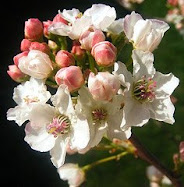
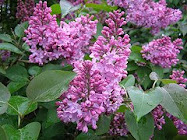
The successes on the road to a perimeter hedge start with the American high bush cranberry. This shrub is a rapid grower, and the two in my garden have shot up from one foot in height to five feet, with equally healthy, spreading circumference. They turn the most brilliant red in autumn, brighter even than the well-known burning bush, and also offer the boon of clusters of red berries (photo from flickr.com at start of this entry). Lilacs also do well here, speeding upward and outward. There are four purple-flowering bushes, two white. If the lilac blooms are picked when spent, the bushes reward the gardener with many more blooms the following spring. One of the white lilacs has not yet flowered in five years, the suspicion is that this is due to having been planted between my house and my neighbor's along the plotline where the sun only reaches for a few hours a day. Last spring I moved this lilac to the backyard, full-sun plotline, and trimmed about a third of the branches back close to the ground, which is said to encourage rejuvenation, so we will see if next spring it breaks free of the flower drought.

Normally the only fertilizing agent applied to the shrubs is a heap of composted cow manure each fall. The two forsythias, however, while covering themselves in felicitous egg-yellow flowers each spring, had not shown the enthusiastic growth forsythias usually revel in. This spring the gardener followed the advice of a village lady with a gangbuster of a garden, and fed them a helping of slow-release Osmocote pellet fertilizer. They responded by adding a foot of height by the fall. The plan is to similarly feed all the garden shrubs next spring, having come round to the village lady's viewpoint that nature, for all her wisdom and nurturance, does not in fact provide all the food that growing plants need without a little help from her friends.

A snowmound spirea under the front windows has grown about four feet upward as well as in width in five years, and is a perfect sphere of frothy white flowers in spring. A younger blue mist spirea also comes on zestfully, and brings a unique turquoise blue flower to the yard in mid-to-late summer, when most shrubs are past their bloom. The final entries begun five years ago, two viburnum Chicago lustres, a dark red Diablo ninebark, a gold flame honeysuckle, and a northern bayberry, have displayed slightly more sedate but still strong growth. The Chicago lustres bear a purple-black berry, but the bayberry has yet to fruit, despite promises at the garden center that it had cross-pollinating male and female roots.

There was a purple-flower butterfly bush for several years, but last summer this was removed and replaced with a fledgling upright cottoneaster. Butterfly bush flowers are undeniably pretty, do have an engaging sweet-grape scent, and do indeed attract butterflies. Their somewhat surly and unsightly characteristics outweigh these pluses, to my thinking. The flowers turn from their dark purple tones to faded brown within just a couple days of opening. The limbs of the shrub have to be cut back by two-thirds each spring, and these limbs grow thick, very tough, and several feet in length in just one summer, making it a real job of work to prune them every year. The trunks and branches are a dull grey color, depressing rather than enhancing the winter landscape. And the shrub begins to green up very late, toward the end of June, so all through the color unfolding of springtime it just sits like a big dead lump in the garden. With hollyhocks, columbine, yarrow, lavender and lots of other butterfly and hummingbird seducers, the butterfly bush just wasn't worth its drawbacks.

The last shrub planted, this past spring, is a fall-flowering witchhazel. Right now it's about two feet high and numbers maybe half a dozen branches. The pictures of its cascading, spiky gold flowers and the fact that it will bring one more autumn bloom to the garden were the determinants in its selection. This shrub is said to be capable of a 20-foot height, if it attains even half that dimension, the gardener will be more than pleased. With the assistance of the shrubs, most of which now reach to my shoulders, one day the garden will boast a true and robust, tall and fruitful wildlife hedge.

November 21, 2008

Winter's Cure

Fall and winter are not the gardener's favorite seasons. Nothing in the plant world grows in fall and winter except underground, out of sight. While the autumn rainy season and winter's deep snowfalls are welcome for the replenishing water supply they bring to the lakes, rivers, streams and plants, their cloud cover and ever-diminishing daily hours of sunshine do put a crimp in the spirit. A surfeit of backache-inducing snow shoveling looms in the immediate future. Hunters with lethal firearms are abroad around the hiking trails. Death and dormancy are the dominant themes.

When the choleric of the overcast skies and cabin-fever inactivity start to shrivel hope and laughter, it's time to lace up the hiking boots and head out in search of nature's cure for the winter blues. In northwest Michigan, each of the four seasons plays out in full fettle. Even in an era of global warming, winter here will be long, lasting at a minimum from November through March, it will be cold. Watching all the leaves disappear from the woods and denuded branches replace swaths of greens and golds, it always seems at first as if winter means months to be lived in gloomy, monochromatic blacks and greys. Taking afoot to the woodland and shoreline trails, however, reveals again, every year, winter's sweetly muted, dappled and multifarious palette of colors.

Along the beaches and dunes, multitudes of marram grass drape clouds of burnt-gold blades and seed heads across the tawny sands. The speckled white bodies of beech trees stand out in bright relief against the tumbled, bruised pewter of the sky. Whimsical milkweed pods fold open to release Santa Claus whiskers in delicate fans. Cherry tree and dogwood branches blush barn red.

On trails across dune meadows and moraines, color abounds in the wild, tomato-red rosehips (as pictured above), sumac, chokecherries, honeysuckle and cottoneaster and bittersweet berries. The characterful, wizened bark of the wolf maple, the shagbark hickory and the willow are on display, the velvet grey elephant-hide trunks of the beeches emerge.

Wherever conifers grow, dozens of variations of green march tall and vibrant across the landscape. The first snowfalls of the season came in off Lake Michigan this week, bringing not much more than a few inches of accumulation but laying a downy white blanket on the fields and hills. The snow backdrop makes the greens, golds, ochre, reds, purples and other tints of winter stand up and shout. Pine green, forest green, kelly green, mint, olive, the seaglass green of the hemlocks, these all intensify and grow prouder against the subdued light of winter. And the cornhusk gold of the beach sand and dunes, faceted here and there with hoarfrost, draws and holds the eye softly, warmly.

It gets very quiet in the forest and on the sands. Maybe it is the muffling effect of the snow, partly it is the reduction in traffic and people, dogs and birds larking about. A sacred kind of stillness hovers in the air. The soughing of the wind in the treetops, the rare call of a hawk or crow, the purl of the waves beseeching the shore, the ancient creaking of a fallen tree against the trunks of its brothers and sisters, every sound speaks with more clarity and meaning.

As long as the temperature stays above 20 degrees, as it usually does in this moderate strip of climate bordering the lake shore, one doesn't get chilled when out and about and moving. Whether skating, skiing, hiking, sledding, shoveling or otherwise keeping the limbs pumping and the blood coursing, on a still or gently snowing winter's day even mild exercise keeps the body plenty warm. As an added bonus, it sends happy chemicals swimming into the mind and spirit, washing away the cobwebs of melancholia. Hush a minute, look around you, discover everywhere plentiful and beautiful reminders of the palpable gifts nature presents to us, even in her season of hibernation and sleep.

November 15, 2008

Talking Flowers

One day last week, three feet of snow fell in the northern Great Plains. In Michigan, it was 68 degrees, blue sky, and tempting to go swimming, but that the big lake temperature now hovers in the mid-fifties after successive frosty nights. What happens weather-wise in the Great Plains today will course into Chicago tomorrow, skate across the slippery surface of Lake Michigan and shower upon Michigan's western coast the day after tomorrow. As the first snowfall of the season heads this way, let's put winter on hold for just a little longer and talk flowers.

After getting the garden framework of trees and shrubs planted, the next phase entailed laying in the seeds, seedling plants and bulbs for the flowering beds. These would go across the front wall of the house and much of the front yard, across the back wall of the garage facing the rear of the house, and into a big circular bed middle-left in the back yard. Except for the bulbs that needed to wait for late fall planting, all the starters of the flower patches went into the ground in July. Most have come along famously in size and bloom over the five years since the garden began, others could not seem to get a rooted, lasting grip on the sunny, sandy plot.

For the most part and increasingly over the years, plants chosen must be of a perennial nature. Gardens fitted out with perennials do not require complete planting afresh every year, saving lots of repetitive labor to plant the same space. Cost outlay for plants occurs mainly at the start of a garden and hard-earned dollars don't get invested in flowers that disappear after a single season. Unless a gardener has more money than sense, it seems foolhardy to buy lots of expensive, doomed annuals year after year when there are thousands of perennial options that repay the outlay of sweat equity and greenbacks for years to come.

Of course, sometimes a particular plant that just happens to be an annual holds a special spot in the gardener's favor. Even in my largely perennial garden, some irresistible annuals get re-installed spring after spring. Gomphrena globe amaranth, cosmos, alyssum and bachelor buttons are the ones that invariably get reseeded every year, just because of their exceptional good looks and because my summer garden would seem incomplete without their lovely colors. All of these except the gomphrena (a temperamental Miss) are very easy to grow and want only regular drinks of water to flourish. Cosmos and bachelor buttons will self-seed to a limited extend, not necessarily where originally planted but as surprise shoots scattered hither and yon. Alyssum are supposed to self-seed, and often do for a year or so, but not reliably and pretty much not at all after a very hot, dry August and September.

Sowing seeds directly into the garden is another economizing measure that costs lots less than purchasing already-sprouted seedlings, but the results are often mixed, with maybe a third of seeds never yielding plants. The seed-sowing gardener must water the seeded plots vigilantly and daily for several weeks after planting to have any hope of success, and even then some seeds just lie lifeless in the soil, suggesting that a portion of every batch of seed just doesn't carry the power of germination, for whatever reason.

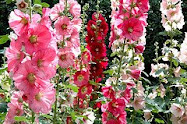
The perennial flowers and herbs that form the meat on the bones of my garden, and get bigger and more flush with blossoms by the year, include peonies, hollyhocks, columbine, lily of the valley, Russian sage, lavender, roses, lilies, mums, yarrow, dianthus, baby's breath, thyme, phlox, chives, daisies, bleeding hearts, snow-on-the-mountain and snow-in-summer, veronica, primroses, Siberian iris, lupines, and poppies. Narcissus and daffodil, windflower (anemone), and alliums are the most successful bulbs.

Foxgloves have not worked very well, whether in a sunny spot where they seem to wilt away if not watered constantly, or in a dappled shade where they seem to languish for lack of sunshine, so I've pretty much given up on them and trying to satisfy their unfathomable needs. Old-fashioned flowering stocks beget one of the most beautiful and possibly the most heavenly scented of flowers (Flickr.com photo at top of this entry), but two summers of seeding stocks gave me not one bloom. Stocks have a multi-budded flower on a tall stalk, similar to a delphinium but with the flower buds more closely nestled together. It took a hunt to find stock seeds, even though this flower is a staple in every florist shop, seed packets for it are rarely found at garden centers and it seems to be slipping into the category of a heritage plant rather than a popular contemporary. First seeded two summers ago, the stocks put up really strong, emerald-green stalks and felty leaves, and kept growing all summer without flowering. This past summer, seeding and watering religiously didn’t even result in any sprouting. Next summer they will get one last try (we live in hope).

Delphiniums also have proven somewhat tough to establish for a multi-year reappearance, but because of their gorgeous flowers, they do get replenished with new seedlings each spring. Smaller butterfly delphiniums, on the contrary, grow and increase their bright cornflower-blue flowers dependably, summer after summer.

The garden also enjoys a couple stands of grasses, one in the front yard and one in the back. Alongside the Russian sage, nice, dense clumps of blue oat grass, miscanthus silver grass, miscanthus fountain grass, pennisetum orientale karly rose, and panicum vergatum switchgrass rise and extend their circumference and height each year. With grasses, experience has shown they like to be watered well at least weekly for the first year or two, thereafter becoming fairly tolerant of periods of drought. The grasses are slow starters each season, not really getting up to speed with new greenery until into late June or July, but then they take off in happy spurts of growth, and wave their feathery arms and seed heads all through late summer and autumn. If left untrimmed, these charmers provide stalks of interesting structure in the garden throughout winter. All get cut back to four-to-six inches height come late March, making way for the next summer's burgeoning. Variegated porcupine and zebra grasses, handsome though they be, failed to become permanent residents in my garden. Variegated grasses do prefer a damp and loamy soil and perhaps are best suited to pond banks, marshy areas and riversides.

All in all, what has been coaxed forth on the sandy lot is a sprawling, spreading, old-fashioned cottage garden. Each type of flower is planted in groupings together with others of its kind to maximize impact. Plants for spring, summer and fall blooming have been purposely incorporated into the staples of the garden so as to have flowers unfolding from April through October. Every garden is forever an incomplete work in progress, and every year around this time, notes get jotted and catalogs scoured for the additions to existing species and the desirable newcomers to be acquired for next spring's sowing season. There is no such thing in the cottage garden as too many plants or no room for more.

November 14, 2008

Looking Forward in Autumn

Come the autumn, garden writers often put forth columns of advice on “putting the garden to bed” for the approaching dormant winter season, sometimes giving the impression this is a task that can be done in one fell swoop. In fact, the bedding down of existing plantings, sowing of bulbs for the next spring, clearing and cleaning up which comprise autumn's garden tasks happen progressively, over a period of months, as the diverse trees, shrubs and plants each reach their own varied apexes, and become ready for the long winter sleep.

At mid-October, when garden magazines might be promoting the cutting down and discarding of perennials, a big, healthy sweep of cosmos were finally just bursting into bloom in my garden. The coreopsis sweet dreams and limerick dreams were both displaying a second, happy round of sienna and apricot-colored flowers, the chrysanthemums had at last attained the flowering stage. Even some of the lavender plants were offering up a second, smaller spray of blooms to be collected and dried into fragrant bundles to decorate a pitcher or vase all winter long.

Raking leaves is never necessary in my garden, thanks to the winds off Lake Michigan which careen through the big, open-field layout of this neighborhood in a notch between high dune bluffs. All debris and leaves which hit the ground promptly get blown away, tumbling down the streets and across yards until they hit the wild fields of the rising hills to the east. If raking were needed, however, it would have to be done repeatedly over many weeks, as the trees also shed their summer growth at disparate, individual rates. The apple trees drop their leaves first in this garden, then the maple, then the cherry, then the aspen, none of them all at once but rather bit by bit. The birch, red oak and pear hold on longest, and lovely it is to have their yallery-russet foliage to gaze upon in November and even December, when otherwise there are but brown and grey empty branches across the hillsides and woods.

At the end of my street, two blocks away, a three-block long stand of northern white pine traces the western terminus of the neighborhood. Beneath these mighty, 40- to 50-foot seniors, a broad and deep carpet of freshly fallen pine needles can be found each autumn. This is the source for an endless supply of free, local, native, excellent mulch for the trees, shrubs and perennials in the garden, as they become ready for blanketing against the freezes and thaws of the coming months. Many a trip is made to the end of the block with the empty wheelbarrow, returning heaped with sweet-scented pine needles, interspersed with a sprinkling of attractive pine cones which will be scattered randomly around the yard to add visual interest. How satisfying it is to tuck handfuls of the pine needles all round and about the chrysanthemums and other flowers, the hydrangeas, forsythia and virburnums, as well as the tree trunks. Like tucking in a child with a thick, warm comforter on a chilly night, the fall mulching with pine needle blankets makes one feel like a good, caring and wise plant nanny, securing the garden family against the cold.

This fall, the intention was to order lots more drumstick and stars of Persia alliums, daffodils, tulips, narcissus, hyacinths, wind flowers and so on, a big, fresh bounty of bulbs to supplement those already in the ground and prepare for a profuse spring. Fate and the dire Michigan economy intervened, however, and the gardener received, in early October, an unanticipated, no-notice-given layoff from gainful employment. Because this meant the only income in the foreseeable future would be bare-bones unemployment benefit, until new employment could be secured in a very bleak market, orders for bulbs had to be forfeited along with all other unnecessary expenditure.

In such circumstances, one tries to remain hopeful and optimistic, to face forward and expect and pursue better opportunity, the old “when one door closes, another opens” attitude. The walking papers came, though, from a job that had been held and glowingly reviewed for some two years, with no raises during the job tenure but promises of a big, year-end bonus due to come just a couple months from now. Further, the professional office that cut the job was actually doing quite well, having quadrupled income over the course of recent months. The owners apparently decided that more of this income could safely be deposited in their own pockets if the position of a decently remunerated staff member was replaced with a novice who could be paid substantially less, and the payment of one year-end bonus rendered moot.

It's challenging not to succumb to bitterness, anger, continual backward gazing, and cursing of the owner-class in such circumstances. It's difficult to comprehend why an employer would not give a productive, successful employee the benefit of advance notice of termination, and every possible opportunity to replace the disappearing paycheck with new employment, before they are shown the door and an indeterminate period of angst and penury. It's not hard to understand why the owner-manager class wishes to keep all the money and all the say-so, to quote W.E.B. DuBois, but the managerial class behaves stupidly and contrary to its own best interest when it treats those who produce for them in such a shabby, dishonest, ill-will generating fashion.

Walking on a balmy autumn afternoon along the lake shore, trying to just hear the whisper of the waves and contemplate the pearly blue horizon, trying not to panic or fall prey to debilitating emotions of self pity and fear, the gardener happened upon another hiker, a lady of a certain age and fellow village resident. She is an exceptionally kind and gentle lady, who started her own craft enterprise of making Peace Bears. This entails claiming discarded and unwanted stuffed animals from yard sales, friends and thrift shops, cleaning and repairing them, embroidering a peace symbol on their chests, and then selling them for a small fee at the farmer's market. After saying hello, the lady explained that she wasn't at her usual weekday post of reception in a local dental clinic because she, too, had been permanently laid off, after the solo-practice dentist suddenly decided to retire. Her job tenure numbered 18 years of service. Her advance notice of termination was 11 days. She was self-effacing and mild-mannered about her stark situation, and the painful conundrum of trying to make mortgage, utility, car note, grocery and other bill payments on a subsistence unemployment benefit.

Maybe these days you have to make your own employment, she hazarded, find ways to generate income working entreprenurially, independent of others, keeping your destiny in your own hands. She went on to tell me about a line of health and beauty products she's trying to sell as a franchisee, and discussed how she wants to take this period of unemployment to work on and develop her artisanal crafts.

Strolling on down the beach, the gardener stopped casting glances backward over her shoulder, stopped revisiting and worrying at and rewriting the endgame and termination meeting at the old job. The late-autumn Indian summer weather means the soil is pliable and ripe for receiving bulbs. The local garden center, because November is upon us, has cut bulb prices in half. With a bit of make-do and thrift, it was doable that at least a swath of snowdrops, perhaps two new congeries of daffodils, and mayhaps another half-dozen alliums could, in fact, be purchased. Gardeners by nature must be hopeful creatures, able to envision the yield in the future for the labor and investment of the present. A garden is nothing if not a work of optimism and sunny expectation. When autumn, or the slings and arrows of bad fortune, bring foreshadowing of diminution and decline, the wise gardener rolls up her sleeves, sticks her hands into breathing earth, encourages the plenty the future will bring, given a bit of elbow grease, and looks steadily forward.

November 12, 2008

Trees

First the gardener must decide, which species of the thousands of trees to plant? Three factors held the most sway in my choices – appearance, including color, shape, and what fruits, nuts or flowers might be borne; durability, including expected lifespan, how rapidly growth and thus shade occur; and finally, suitability for the temperatures, moisture and other elements of the northern Michigan coastal four seasons. Whether to plant trees was never a question, given the tremendous beauty and shelter from Mother Nature's occasional fits and furies which trees provide, and the inimitable good they confer upon the environment by cleaning the air of toxins and creating oxygen. One mature oak tree, for instance, creates all the oxygen needed by 10 humans.

The only tree in this garden that didn't measure up to all the selection criteria was a cedar, which needed a lot more water and less wind than the site or the gardener could offer, and which segued into the great forest in the sky after a painful struggle of just two years. The best performers to date, on the other hand, are the Cleveland ornamental pear and the white spire river birch.

Everyone knows how pretty birch trees are (see Flickr.com photo at top of this entry), which their shaggy white bark, sharp green leaves that slowly transform to butter yellow in autumn, and graceful, pendulous branches. It's a source of amazement that the river birch in the front yard went from a five-foot sapling with the trunk span of a stout walking stick to a 30-foot high lush shade-maker with a strapping, foot-and-a-half trunk span, in just five years. The Cleveland pear, maybe a little less familiar, gets covered in lovely, fragrant white blossoms every May, has a fetching natural triangular shape and very dense, full leaf development. It bears tiny little ornamental pears about the size of a dime, which the birds love but require not one whit of harvesting or cleaning up. Its other great feature is its ability to hold onto leaves and kelly green color right into November, even in a climate where Jack Frost usually pays his first visits early in October. When the color shift comes, the leaves gradually progress in a gorgeous pageant from shiny bright green to lime, to lemon yellow, to russet, and finally into a dark, burgundy red. Baring gale-force windstorms, most of the leaves stay on the branches into early- to mid-December, well after every other tree is winter naked.

Just this year, an article unveiled the unhappy information that ornamental pears, because all the branches grow from a single (non-branching) trunk, are vulnerable to the trunk splitting from the top downwards, if strong winds pull at the dense leafage. Which strong winds certainly do in this garden, and alas and alack, this spring when admiring the tree's growth and giving it's trunk an affectionate pat or two, indeed a newly developed split in the trunk was discovered. The split starts at the top of the trunk (about six feet from the ground), and extends downward about a foot and a half, so not yet into the lower core of the trunk. The pear is such a favorite, and with its branches now stands about 20 feet high, so it was a heart breaker to descry the breach that could mean the beginning of the end for this five-year old.

Unwilling to accept such a sad fate for one of the garden's inaugural trees, a stint with the thinking cap in place determined two courses of remedial action. First, a tough rubber brace was secured slightly loosely, with room for a little play, breath, and growth, around the trunk just at the mid-point of the split. The hope is that the brace will support the trunk against the tugging of the wind and keep the split from proceeding further down the trunk. The brace is about the length and a little thicker than a bungee cord, made of very hard black rubber, and was among the garden stuff in the garage, though what it is really for or what it is called are pieces of information lost to the mists of time.

Second, about a dozen whole garlic cloves were planted around the base of the tree. Garlic is an almost miraculous herb, with very robust viral and fungal healing powers (not to mention that it wards off grazing deer even better than it spooks vampires, and it makes roses flourish). Once in another garden, a young plum tree fell sick with a fungus called “Witch's Finger,” which basically strangles new branches with a sticky, black, gnarled-finger-looking growth. Reasoning, or hoping, that the garlic cure which can halt Montezuma's revenge, cure cold sores, fight cancers and knock down colds in humans might also be beneficial to a tree, the affected branches were loped off the plum and garlic planted all around its base. It healed, survived and took to growing again. Thus it seemed that a dose of garlic for the pear might help the raw, vulnerable edges of the split in the trunk to heal over, as well. These two treatments (or maybe more accurately, experiments), were effected in May of this year, and as of this writing in November, the split has not progressed further down the trunk, and the split's edges do seem to be hardening off. Time will tell, as with all things in the garden, if it's sufficient to preserve the Cleveland pear.

The rest of the trees planted the first year all grace the backyard, spaced around its perimeter, with the conifers in the back westerly corner. The October glory maple lives up to its name by turning a brilliant, flame red each fall, and has grown pretty well, now standing some 15 feet high after five years.

Nut-bearing trees seem to grow more slowly than other deciduous types. This has definitely been true for the red oak, which has branched out fairly nicely, but gained only maybe a foot of height and half-a-foot of trunk span across five years. The white pines and Colorado spruce followed the old cliché of plant growth, to wit, “first year sleep, second year creep, third year leap,” and didn't increase very measurably in height or width till their third or even fourth year, but as of this summer took to leaping up and out very nicely. Probably took them awhile to decide they could put up with the rackety, ever-recurring winds that swoop through the yard in all seasons, especially from their northwest back corner. Maybe one day they will actually achieve enough mass to block some of the fierce winter winds that charge up from that corner on a regular basis to dump snow loads on my back sidewalk.

The crab apple tree grows well and is a pink picture of blossoms every May, as well as a fall treat for the birds with its claret red fruits. Some of the latter even survive to throw a handful of bright color into the winter-white landscape of snow and ice. Because spring blossoms just finish in delight the view of any landscape, two additional trees put into the garden are a Fuji apple tree in the back, frilly in white each spring, and a self-pollinating (hooray!) Tartarian black cherry tree in the easement out front. The apple is two years old now, and has produced one apple each year -- watching this space for more productivity as maturity ripens! The cherry was planted this summer, one has sky-high hopes of someday plucking that most favored fruit from it.

Lastly, two years ago a quaking aspen was placed, stripling of twig size, in the front yard, and true to its eager nature, now reaches 15 feet in height with a hand-span, palest mint green, sturdy trunk. It, like the birch, transforms its grass-green, heart-shaped leaves over a long month or more, October into November, to a golden yellow. This tree takes its name from the way the leaves flip back and forth in the wind, giving the appearance of “quaking” and raising a soft, shuffling kind of sound, so it talks as good as it looks.

Trees frame-up the garden, draw the eye toward vistas, cosset the spirit with their robust handsomeness and several bounties of fruit, nuts, canopy, solid wooden bones. They seem calm, they reassure, they seem wise. Unlike many other garden dwellers, with a modicum of nurturing they live and reward their stewards for a long, long time. They'll harbor a tree fort and allow swings to sway from their arms. To climb one and sit hidden, daydreaming upon a branch, is to thumb one's nose at gravity and to soar just a little. Trees are nature's crowning glory.